How to clear your Chief Engineer's Oral Exam
Practical guidance on how to prepare for the Chief Engineer oral exam: how surveyors ask questions, what they expect in an answer, and common mistakes candidates make under pressure.
Real MMD oral questions, explained for Chief Engineer and 2nd Engineer candidates
The Chief Engineer (MEO Class I) oral at a Mercantile Marine Department (MMD) is a conversation with a surveyor, not a recitation. You are expected to show that you can manage a ship's machinery, crew and legal obligations when something goes wrong. These videos work through questions of the kind candidates report being asked, at the MMD offices in Mumbai, Kochi, Chennai and Kolkata.
A reliable way to build an answer, whatever the topic, is to move through the same steps in order:
Watch a video, pause before the answer, and speak your own answer aloud first. Then compare. Practising out loud, ideally with another candidate or a senior, is what exposes gaps.
Practical guidance on how to prepare for the Chief Engineer oral exam: how surveyors ask questions, what they expect in an answer, and common mistakes candidates make under pressure.
How a Chief Engineer should respond to questions about reverse mentoring, where junior crew share knowledge upward, and why examiners ask about it.
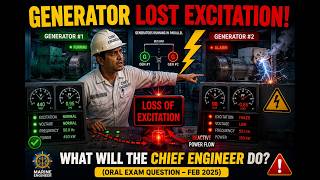
A frequently asked MMD oral question: the actions a Chief Engineer must take when one of two generators running in parallel suddenly loses excitation, including load sharing and safety steps. (Upendra, Feb 2025)
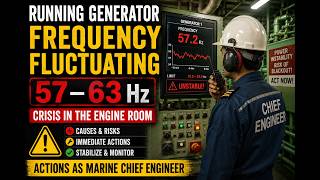
The correct emergency response when a running generator's frequency starts to fluctuate, a common scenario question in Chief Engineer orals.
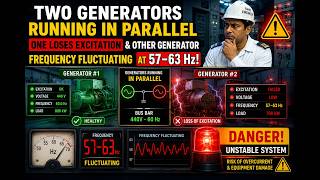
The key differences between two similar-sounding oral exam scenarios, loss of excitation versus frequency fluctuation, and how the Chief Engineer's response differs for each.
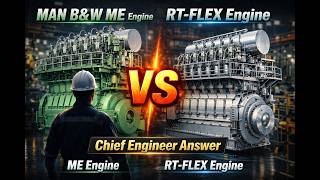
MAN B&W's ME electronically controlled engines compared with Wärtsilä's RT-Flex engines, covering the operational and design differences examiners expect a Chief Engineer to know.
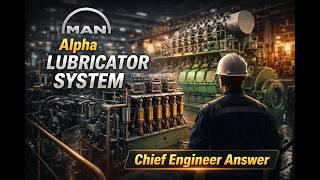
How the MAN B&W Alpha cylinder lubrication system works, and which points examiners typically probe.

Alternative marine e-fuels such as e-methanol and e-ammonia, why shipping is adopting them, and how to discuss them confidently in an oral exam.
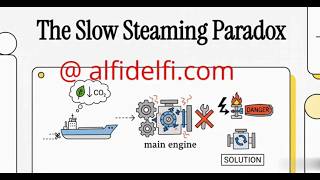
How to structure a strong answer on LNG, methanol, ammonia and hydrogen when an MMD surveyor asks about alternative fuels.
Methane slip in LNG-fuelled engines and Tier III NOx compliance requirements, two increasingly common topics in modern orals.
The Himalaya Clause, a provision that extends carrier liability protections to servants, agents and independent contractors, regularly asked in Chief Engineer orals.
The Inchmaree Clause, a marine insurance provision covering losses from crew negligence or latent defects, and how to explain it in an oral exam.

What UNCLOS Article 91 (nationality of ships) and Article 94 (duties of the flag state) require, and why examiners test them.
IACS Procedural Requirement PR 17, which governs how ISM management-system failures and non-conformities are reported, and how to explain it clearly to an examiner.
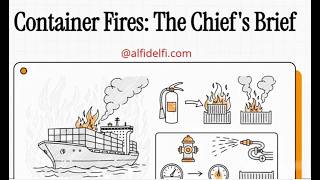
The steps a Chief Engineer should take if a container fire breaks out on board, a standard emergency-response question.
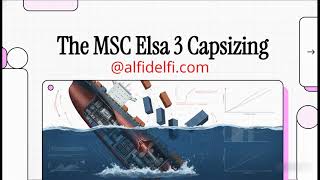
The container ship that capsized and sank off the Kerala coast in May 2025 while carrying hazardous cargo, and the lessons for Chief Engineer candidates.
A Very Large Crude Carrier explosion and sinking, and the safety and operational lessons it holds for candidates.
How ballast tank capacity on bulk carriers is regulated, and what examiners expect a Chief Engineer to know about ballast rules.
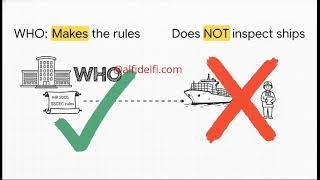
Shipboard sanitation requirements and vector-control measures under maritime health regulations, and how to answer this topic.

How this website was hijacked and recovered: a cautionary account for anyone running a long-standing exam preparation site.
For the 50-question practice quiz, the centre-wise oral question pages for Mumbai, Kochi, Chennai and Kolkata, and the written examination resources, return to the Marine Chief Engineer Oral & Written Examination page.